
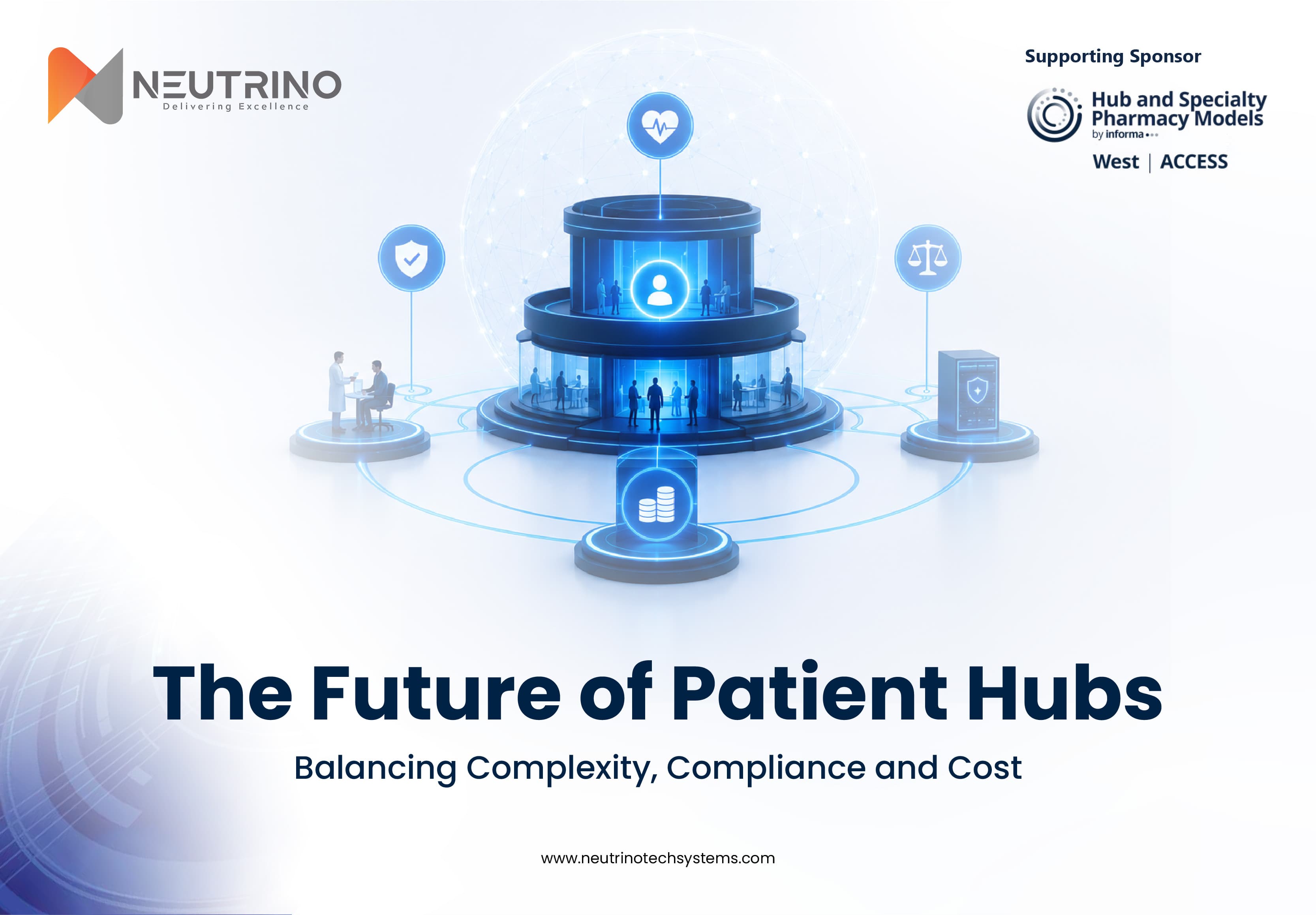
Patient hubs have evolved far beyond their traditional role of supporting reimbursement and access. Today, they serve as strategic touchpoints that connect manufacturers, providers, specialty pharmacies, payers, and patients to deliver a more coordinated care experience. As specialty therapies continue to grow and patient expectations evolve, hubs are expected to manage increasingly complex journeys while maintaining efficiency, ensuring compliance, and controlling operational costs.
This evolution is reflected in the market itself. The global hub services market, valued at approximately $3.55 billion in 2025, is projected to reach $10 billion by 2035, driven by the continued growth of specialty therapies and increasingly complex patient access pathways.
As healthcare leaders prepare for conversations at HUB West 2026, one question is becoming increasingly important: How can organizations unlock the full potential of patient hubs without allowing complexity, compliance, and cost to become barriers to better patient outcomes?
Complexity Is Growing Faster Than Capacity
The challenge isn't that patient hubs are becoming more important. It's that their responsibilities are expanding faster than many organizations can effectively manage.
Today's patient hubs are expected to:
Coordinate across manufacturers, providers, specialty pharmacies, payers, and patients.
Manage growing volumes of data across multiple systems.
Navigate evolving reimbursement requirements and access policies.
Deliver personalized support while maintaining operational efficiency.
As these responsibilities continue to grow, many organizations still rely on fragmented systems and manual workflows that limit visibility and slow decision-making. Teams often spend valuable time tracking documentation, coordinating across disconnected platforms, and resolving administrative tasks instead of focusing on improving patient access and engagement.
Complexity itself isn't the obstacle. The real challenge lies in building operations that can scale with evolving demands while maintaining a seamless experience for every stakeholder involved.
Compliance and Cost Are More Connected Than Ever
As hub operations become more sophisticated, compliance and cost management are no longer separate priorities. Regulatory expectations around data privacy, documentation, and audit readiness continue to evolve, while organizations face increasing pressure to improve operational efficiency without compromising patient trust.
Disconnected workflows, fragmented data, and repetitive administrative tasks don't just increase operational costs. They also create inconsistencies, slow response times, and increase the likelihood of compliance risks. What starts as an operational inefficiency can quickly become a regulatory challenge, making it more difficult for organizations to scale confidently.
Rather than treating compliance as a final checkpoint or cost optimization as an isolated initiative, leading organizations are embedding governance into everyday operations. Standardized processes, greater visibility, and connected workflows create a stronger foundation for efficient, compliant, and resilient hub operations.
Building Hubs That Are Ready for the Future
The next generation of patient hubs won't be defined by the number of services they offer. Their success will depend on how effectively they connect people, processes, and information across the patient journey.
Creating that level of connectivity requires more than implementing new technology. It requires rethinking how hub operations are designed and managed. Connected workflows, integrated data, and intelligent automation can help reduce administrative burden, improve collaboration, strengthen compliance, and provide greater visibility into operational performance. At the same time, these capabilities allow hub teams to spend less time on repetitive tasks and more time delivering meaningful support where it matters most.
Organizations that embrace this approach won't just be better equipped to manage today's challenges. They'll be prepared to adapt to changing patient expectations, evolving therapies, and the future of patient access.
Wrapping Up
Patient hubs have become a strategic cornerstone of modern patient access, but realizing their full potential requires more than expanding services. It requires an operating model that can balance complexity, strengthen compliance, and maintain financial sustainability while keeping the patient experience at the center.
As the conversation around patient support continues to evolve, the focus is shifting from simply managing hub operations to building connected, resilient ecosystems that improve outcomes for patients and every stakeholder involved.
Meet Us at HUB West 2026
If you're attending HUB West 2026 in San Diego, we'd love to connect and exchange perspectives on the trends shaping the future of patient hubs and how organizations can navigate the next phase of transformation together.
Book a meeting with us: https://calendly.com/nts/