AI is finding its way into almost every part of healthcare, and patient access is no exception. Organizations are using AI to summarize information, automate tasks, surface insights, and support decisions. Yet access teams still work across CRMs, hub platforms, payer portals, EHRs, specialty pharmacies, documents, and spreadsheets.
So why does fragmentation persist?
Because adding intelligence to individual systems does not automatically make the entire journey intelligent. An AI assistant may summarize a case or answer a question, but without understanding the patient, payer, program, workflow, documents, and what has already happened, its recommendations can only go so far.
The real opportunity is not simply adding more AI. It is giving AI the context to understand the journey and the ability to act within it.
The Patient Sees One Journey. Access Teams See Many.
A patient access journey rarely lives in one place. Enrollment may begin through a portal or referral, benefits information may come from a payer system, supporting documents may arrive by fax, and prior authorization may move through another workflow entirely. Each system captures a piece of the story, but the full picture often remains scattered across teams, applications, and queues.
That fragmentation creates more than an operational inconvenience. Case workers may spend valuable time searching for information that already exists. Important requirements can be missed, handoffs can stall, and barriers may only become visible after a case has already been delayed.
The challenge, then, is not simply collecting more data. It is creating a shared context that helps teams understand what is happening and what needs to happen next.
AI Needs More Than Data. It Needs Context.
An AI system can only make a useful recommendation when it understands the situation behind the data. In patient access, that situation can change quickly.
A missing document may be the only thing holding up a case. A payer requirement may have changed. A prior authorization may be nearing expiration. A provider may still need to respond. A patient may qualify for an affordability program that has not yet been explored.
These signals matter individually, but their real value emerges when they are understood together.
This is where context changes the role of AI. Instead of simply finding information or generating a response, AI can assess the current state of the case, identify what is standing in the way, and help determine what should happen next.
The goal is not smarter answers in isolation. It is more relevant decisions within the access journey.
From Intelligence to Action
Knowing what is happening is only the first step. The real value comes from knowing what to do next.
In patient access, the right action depends on more than the task sitting at the top of a queue. A case worker may need to request a missing document, verify a payer requirement, follow up with a provider, prepare a prior authorization package, or escalate a case before a deadline.
AI can help prioritize these actions by considering the full case context, current workflow stage, unresolved barriers, program rules, deadlines, and previous activity.
That changes the role of AI from an answer engine to an active part of the workflow. Instead of simply telling teams what they know, it can help them understand what matters now and move the case forward.
The goal is not just intelligent insight. It is intelligent execution.
Context Is Only Useful When It Comes With the Right Knowledge
Patient access decisions are rarely based on case information alone. They depend on the healthcare knowledge surrounding that case.
Payer policies, program rules, coverage criteria, formulary information, SOPs, documentation requirements, and approved communications can all influence what happens next. Yet having this information stored somewhere is not enough. Teams need the relevant knowledge at the moment a decision needs to be made.
AI can help bring that knowledge into the workflow, connecting the specific case with the policies, requirements, and guidance that apply to it. With the right context and source-backed knowledge, recommendations become more relevant, traceable, and actionable.
That is the difference between AI that can retrieve information and intelligence that can support a healthcare decision.
Intelligent Automation Still Needs Human Oversight
Not every patient access decision should be automated in the same way. The level of AI involvement should depend on the task, its risk, the available context, and the confidence behind the recommendation.
For some activities, AI may simply summarize a case or surface a relevant insight. For others, it can recommend a next best action, prepare a document, or route work for approval. Where appropriate, governed agents can execute authorized actions and monitor the outcome.
The important distinction is that agentic automation does not mean handing over control. Permissions, confidence thresholds, human approvals, and audit trails help ensure that automation operates within defined boundaries.
The goal is not to remove people from the process. It is to give them better intelligence, reduce repetitive work, and keep human judgment where it matters most.
AccessOS: Turning Connected Context into Intelligent Action
This is where connected intelligence becomes important. Instead of treating AI as another tool layered onto an already fragmented environment, organizations can bring context, workflows, healthcare knowledge, integrations, and intelligence together within the access journey.
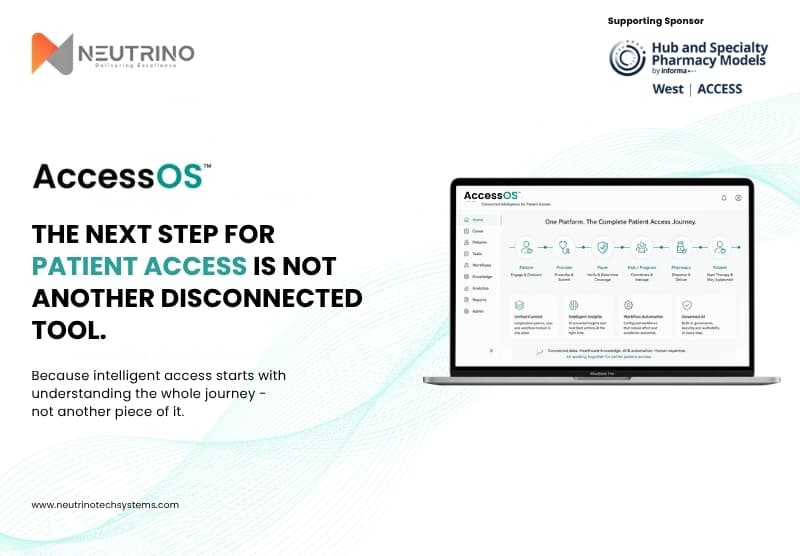
AccessOS is designed around this approach, providing a connected execution and intelligence layer across patient access operations. It brings together longitudinal access context, configurable workflows, healthcare knowledge, integrations, copilots, and governed AI capabilities so teams can move from understanding a case to taking the right action. Organizations can use AccessOS as a primary execution platform or embed its intelligence alongside existing CRM, hub, and other systems.
The result is AI that is not simply available within patient access, but connected to how patient access actually works.
The Future of Patient Access Is More Than AI
AI will continue to change how patient access teams work. But its impact will depend on more than the intelligence of the technology itself.
The real opportunity lies in connecting that intelligence to the context of the patient journey, the workflows that move it forward, and the healthcare knowledge that guides every decision.
For organizations looking to make AI more practical, actionable, and scalable, the shift is clear: from isolated AI capabilities to connected intelligence that works across the access ecosystem.
The goal isn't more AI in patient access. It's better intelligence within patient access.
See Connected Intelligence at Access West
The next step for patient access is not another disconnected tool. It is an ecosystem where context, intelligence, workflow, and human expertise work together.
That is the shift from AI as an isolated capability to AI as part of how access teams operate.
At Access West, Neutrino will explore how AccessOS brings this approach to life, connecting patient access operations with intelligent workflows, contextual insights, and governed automation.
September 1–2, 2026 | San Diego
Meet the Neutrino leadership team at Access West to explore what connected intelligence can mean for your patient access journey.