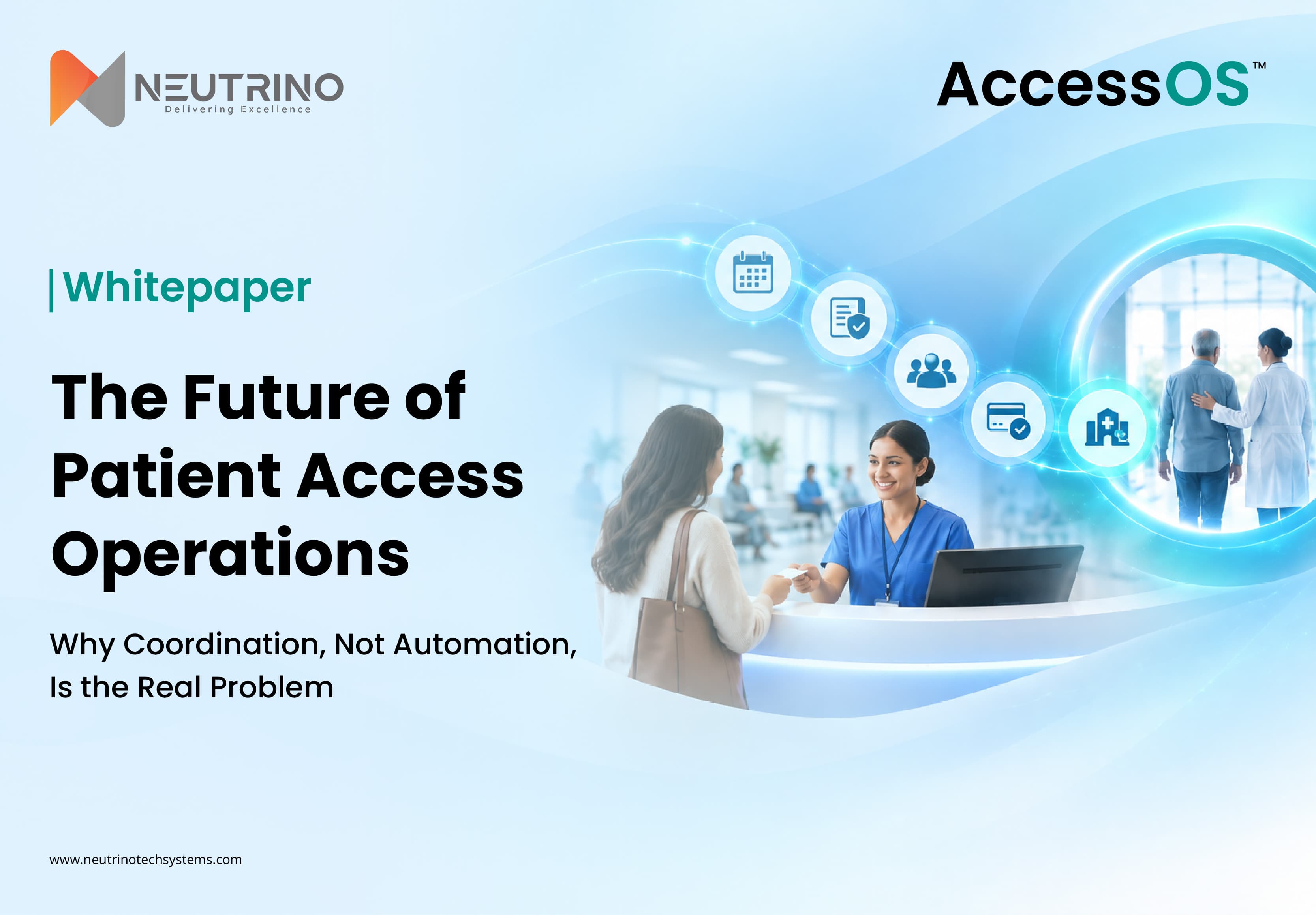
The Future of Patient Access Operations: Why Coordination, Not Automation, Is the Real Problem
Patient access is shaped by a complex network of systems, stakeholders, workflows, and information — the real challenge is not the number of technologies involved but how effectively they work together. Healthcare organizations operate across CRM systems, hub platforms, payer portals, specialty pharmacies, EHRs, and other operational systems that often work independently, creating disconnected workflows and access barriers that only become visible after they begin affecting therapy progression. AccessOS addresses this by bringing together unified access context, configurable journey orchestration, embedded intelligence, and governed AI agents within one connected platform — serving as either a primary execution platform or an embedded intelligence layer alongside existing systems.
What you will find
- 1The Patient Access Coordination Problem — Enrollment, benefits verification, prior authorization, appeals, affordability, fulfillment, and reauthorization are managed through separate applications, queues, and teams — creating disconnected data and manual coordination, with access barriers often surfacing only after they begin affecting therapy progression.
- 2Why Current Approaches Fall Short — Automating individual tasks, integrating systems, or adding a generic AI assistant does not resolve the underlying coordination problem — intelligence and automation need operational context, orchestration, and governance to be effective.
- 3AccessOS: The Operating System for Patient Access — AccessOS connects unified access context, configurable workflow orchestration, embedded intelligence, and governed AI agents into one platform that can run standalone or alongside existing CRM, hub, EHR, and specialty pharmacy systems.
- 4Configurable Execution Across the Access Journey — Reusable workflow components provide a consistent operational foundation while individual programs configure their own forms, rules, SLAs, documents, and routing logic — without rebuilding the platform for every new therapy or program.
- 5Intelligence Embedded in the Flow of Work — AccessOS embeds AI directly into operational workflows — supporting case summarization, risk identification, next-best-action recommendations, and copilots — grounded in real case, program, and payer context rather than operating as a separate destination.
Get the full whitepaper
Enter your business email below — the PDF opens instantly in a new tab, no registration required.
Download Now
Enter your business email to download The Future of Patient Access Operations: Why Coordination, Not Automation, Is the Real Problem.
The PDF will open in a new browser tab.
Related whitepapers
Enhancing Patient Outcomes & Satisfaction: How Technology Is Rewriting the Patient Journey
As healthcare shifts toward value-based patient journey and care, traditional reactive models and fragmented data silos are no longer sustainable. This whitepaper explores how modern technology bridges the gap between clinical excellence and the patient experience. By leveraging the Four Pillars of Modern Patient Impact, health systems can transform manual, disconnected workflows into a seamless and proactive care journey.
Redefining Computer System Validation: A GenAI-Powered Shift from Compliance to Continuous Assurance
For pharmaceutical and life sciences organizations, traditional Computer System Validation (CSV) has become a high-cost, rigid barrier to innovation. The exhaustive documentation and manual testing inherent in legacy processes impede agility and delay time-to-market for critical digital systems. This executive white paper details the strategic move from reactive CSV to Continuous Assurance powered by Generative AI (GenAI). We explore the FDA's guidance on Computer Software Assurance (CSA) and provide a blueprint for deploying GenAI to dramatically reduce documentation burden, implement predictive failure analytics, and establish dynamic, real-time traceability.
Explore Neutrino AI
Healthcare-focused AI ecosystem for patient access, interoperability, workflow intelligence, and operational transformation — AccessHub, AccessFlow, AccessFabric, and the Payor Rules Engine.