
Chronic Care Management: Connecting the Dots Across the Patient Journey
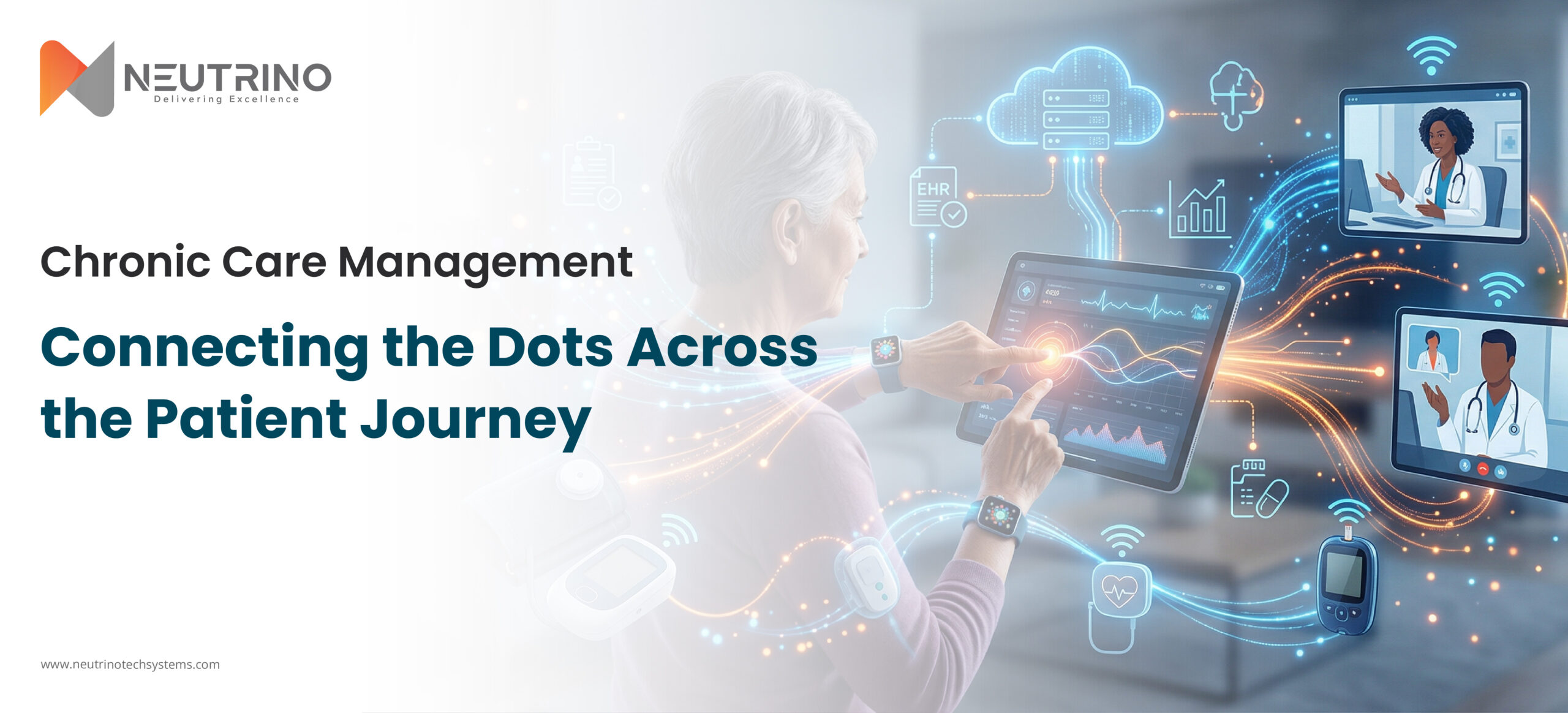
Managing a long-term condition can often feel like trying to piece together a puzzle without ever seeing the full picture. Medications, consultations, follow-ups, and daily decisions all play a role, yet they rarely come together in a way that feels connected or continuous. Over time, this lack of cohesion can make care feel more complex than it needs to be. This is where chronic care management becomes essential, not just as a clinical function, but as a way to bring clarity, coordination, and continuity to ongoing patient journeys.
The scale of this challenge is significant. According to the Centers for Disease Control and Prevention, 6 in 10 adults in the United States live with at least one chronic disease, underscoring the growing need for more connected and proactive care approaches.
Why Chronic Care Management Is Inherently Complex
CCM is fundamentally different from episodic care because it unfolds over extended periods and involves multiple stakeholders at every stage. A single patient journey may span specialists, primary care providers, pharmacies, insurers, and support programs, each contributing valuable but often disconnected pieces of information. This creates gaps in visibility, where no single system or team has a complete understanding of the patient’s ongoing needs.
The complexity is further amplified by the non-linear nature of chronic conditions. Treatment plans evolve, patient responses vary, and adherence can fluctuate over time. Without a connected view, care teams are often left reacting to isolated events rather than managing the full trajectory of the patient journey. The challenge, therefore, is not just delivering care but ensuring continuity across every interaction.
The Need for a Connected Patient View
Managing chronic conditions requires more than isolated clinical insights. It calls for a continuous view of the patient that brings together treatment history, medication adherence, and engagement patterns into a cohesive narrative. Without this, critical signals are often missed, making timely intervention difficult.
This is where Patient 360 becomes essential to chronic care management. By unifying data across clinical, pharmacy, and patient support systems, it enables a more complete understanding of the patient journey. For a deeper look at how this view is built, explore our previous blog on Patient 360 in healthcare.
Key Components of Effective Chronic Care Management
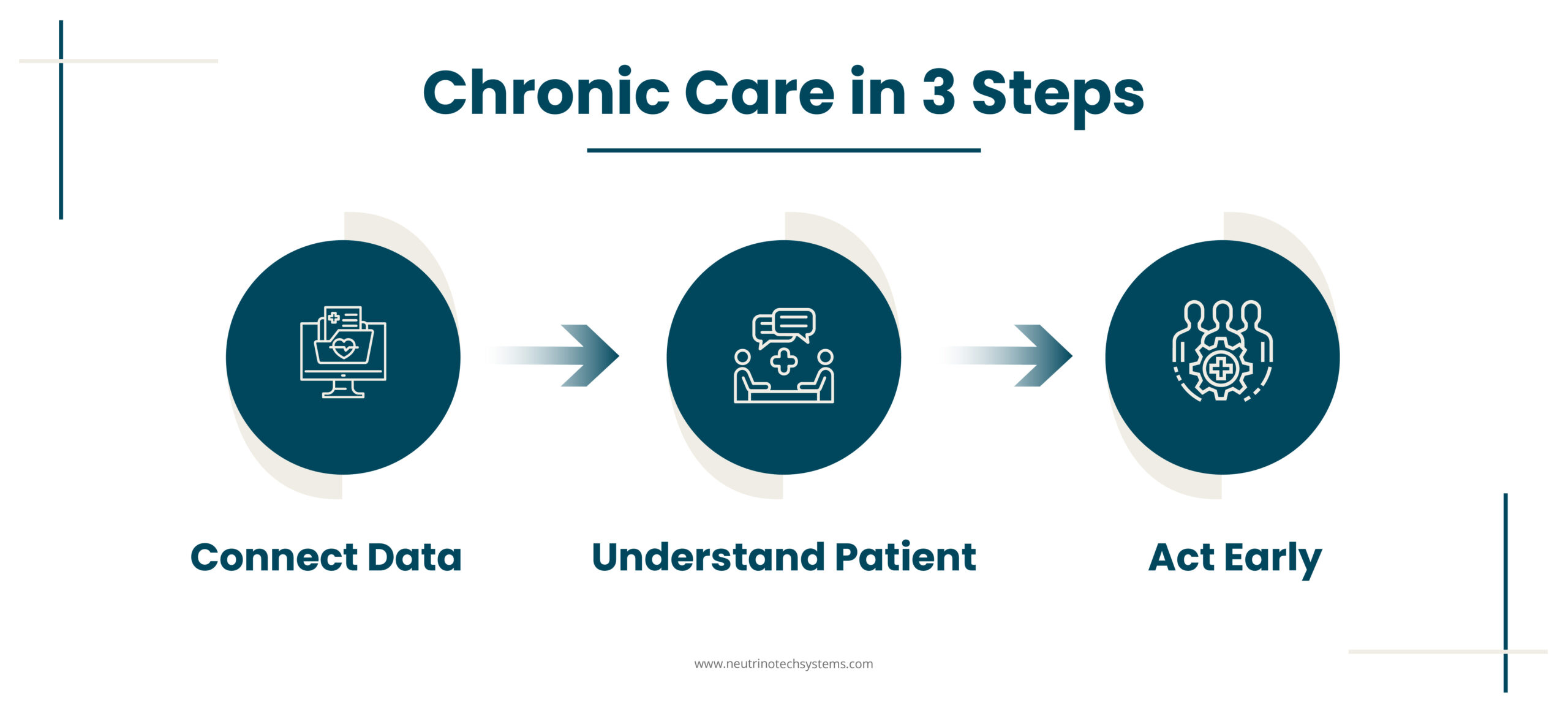
Effective chronic care management is proactive, team-based, and centered around the patient rather than just the condition.
Key components include:
- Comprehensive care planning that evolves with the patient over time
- Regular communication to monitor progress and adjust care plans
- Medication management to ensure adherence and minimize risks
- Care transition management across providers and care settings
- Patient education and empowerment to support long-term self-management
The Role of AI in CCM
As healthcare data becomes more connected, AI is playing an increasingly important role in strengthening CCM. Rather than relying solely on retrospective analysis, AI enables care teams to anticipate risks, prioritize interventions, and respond more effectively to changing patient needs.
By analyzing patterns across clinical history, medication data, and patient behavior, AI can identify high-risk patients earlier and surface signals that may not be immediately visible. It can also help detect gaps in care, such as missed follow-ups or declining adherence, allowing timely intervention. In this way, AI shifts chronic care management from a reactive process to a more proactive and continuous model of care, where decisions are informed by real-time insights rather than delayed observations.
Enabling Chronic Care Management with Intelligent Platforms
While the value of connected data and AI is clear, many healthcare organizations struggle to translate these capabilities into everyday care delivery. Fragmented systems, disconnected workflows, and limited interoperability often prevent insights from being effectively used at the point of care. Enabling chronic care management at scale therefore requires platforms that can unify data and embed intelligence directly into care processes.
Neutrino’s CareIQ, an AI-powered healthcare accelerator, is designed to address this gap by bringing together clinical, pharmacy, and patient engagement data into a single, connected ecosystem. With real-time insights, dynamic dashboards, and integrated workflows, CareIQ enables care teams to monitor long patient journeys, improve medication adherence, and deliver more coordinated, proactive care across complex treatment pathways.
The Future of Chronic Care Management
As healthcare continues to evolve, the focus is gradually shifting from managing conditions at specific points in time to supporting patients continuously throughout their journey. This shift is redefining chronic care management, making it more connected, personalized, and responsive to real-world patient needs.
With advances in AI, remote monitoring, and digital health platforms, care teams can gain ongoing visibility into patient health, enabling earlier interventions and more informed decision-making. This creates an opportunity to move beyond reactive care toward a model where support is timely, coordinated, and aligned with each patient’s unique journey. Ultimately, the future of chronic care management lies in building systems that not only treat conditions but actively guide patients through them.
Wrapping Up
Chronic care management is no longer just about managing conditions. It is about managing continuity across a patient’s entire journey. As care becomes more distributed and data more abundant, the ability to connect, interpret, and act on patient signals will define how effectively healthcare systems support long-term outcomes.
We at Neutrino see this as an opportunity to rethink how care is delivered. By combining AI-driven platforms with strong data engineering foundations, we aim to help organizations move from fragmented interactions to more connected, proactive, and patient-centered care experiences.